
Honoring the states we serve · Massachusetts
The Paul Revere House: Who Was Paul Revere, and Why His Boston Home Still Matters
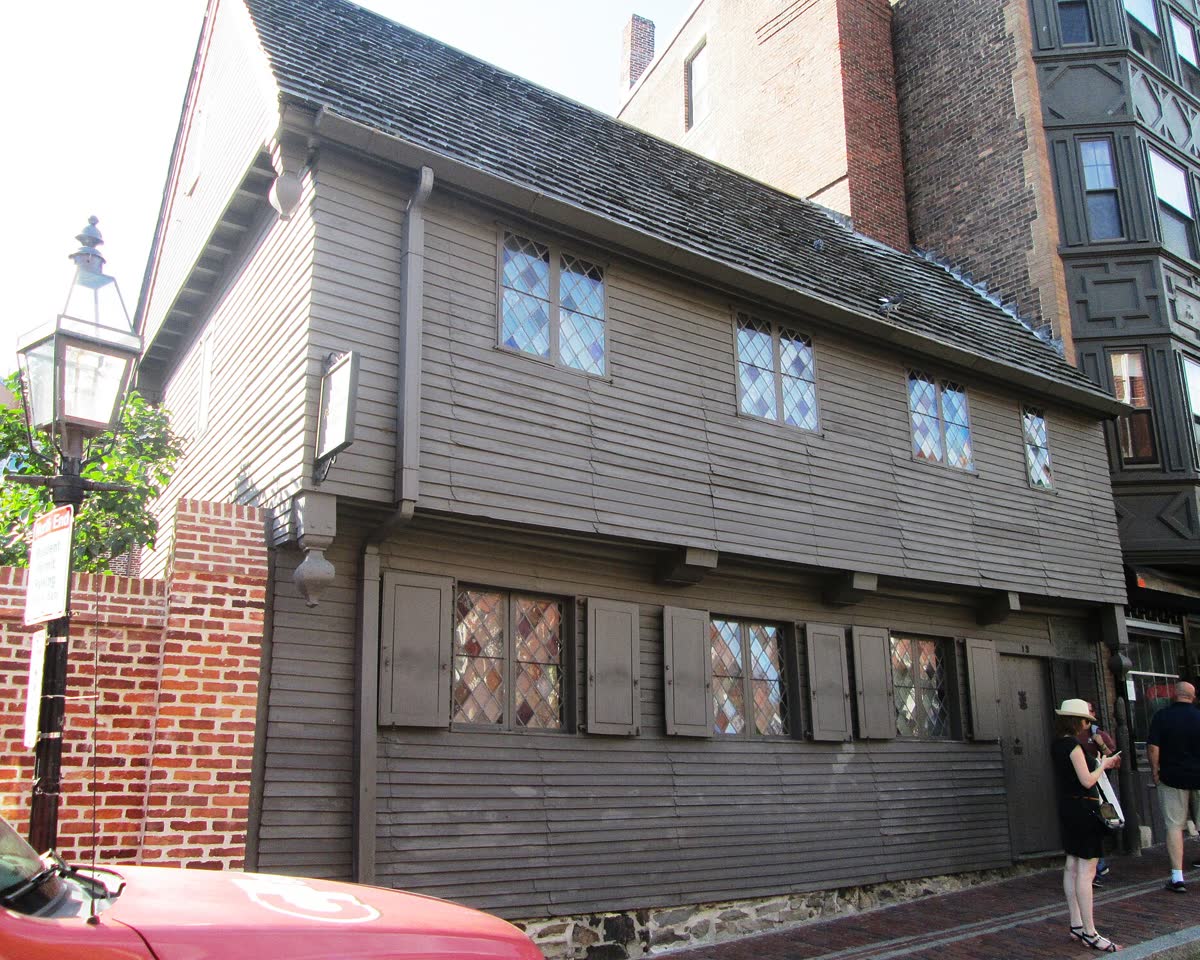
On a small square in Boston's North End stands a wooden house built around 1680. It is the oldest building still standing in downtown Boston, and from 1770 to 1800 it was home to Paul Revere, the silversmith whose ride on April 18, 1775 became one of the best-known stories in American history.
Who was Paul Revere?
Paul Revere (1734–1818) was a Boston silversmith and engraver, the son of a French Huguenot immigrant. He made silver teapots, spoons and bowls, engraved printing plates, and even made false teeth to support a large family: he and his two wives, Sarah Orne and Rachel Walker, had sixteen children.
He was also deeply involved in the movement for American independence. Revere was active with the Sons of Liberty, made the famous engraving of the 1770 Boston Massacre, and in 1774 and 1775 worked as an express rider for Boston's patriot committees, carrying news and messages as far as New York and Philadelphia.
The midnight ride, as it really happened
On the night of April 18, 1775, British troops prepared to march out of Boston. Revere arranged for two lanterns to be hung in the steeple of Christ Church, today's Old North Church, to signal to patriots across the river that the troops were leaving "by sea," across the Charles River.
Revere then rode toward Lexington, warning militia leaders and households along the way, to alert Samuel Adams and John Hancock, who were staying there. He was not alone: other riders, including William Dawes, carried the same warning by other roads. Revere was stopped by a British patrol before reaching Concord, but the alarm had already spread. The next morning, the first shots of the American Revolution were fired at Lexington and Concord.
The ride became legend through Henry Wadsworth Longfellow's 1861 poem "Paul Revere's Ride." The real story, with many riders and many neighbors passing the word, is arguably even better.
Life after the Revolution
After the war Revere became an industrialist. He cast church bells and cannon, rolled copper sheathing for American naval ships, and in 1801 opened North America's first copper mill, in Canton, Massachusetts. In 1802 his copper covered the dome of the Massachusetts State House.
The house itself
The house at 19 North Square was built around 1680, after a great fire swept the North End. Revere bought it in 1770 and owned it for thirty years. In the 1800s it became a boarding house, shops and apartments for immigrant families in the North End. In 1908, after a restoration, it opened as one of the earliest historic house museums in the country. Today it is a stop on Boston's Freedom Trail.
Planning your visit
- Address: 19 North Square, Boston, MA 02113.
- Hours and tickets: these change by season, so check paulreverehouse.org before you go.
- Nearby: the Old North Church, Hanover Street's cafés and bakeries, and the rest of the Freedom Trail are all a short walk away.
Living near Boston's history
Much of Greater Boston's charm comes from neighborhoods like this one, where brick row houses, old churches and corner shops sit beside new homes. If you're dreaming of owning a home in Boston, the North Shore, or anywhere in Massachusetts, our team can help you understand your options, compare programs from several lenders, and explain every step in English, Português or Español.
Talk with our teamEstimate a monthly payment
More stories from the states we serve →
Sources
- Paul Revere Memorial Association, "The Real Story of Paul Revere's Ride"
- Commonwealth of Massachusetts, Commonwealth Museum: Paul Revere
- National Park Service, Boston National Historical Park
Part of our series honoring the communities in the nine states where Beyond Financing, Inc. is licensed. Beyond Financing, Inc., NMLS #2394496. Equal Housing Opportunity. This is not a commitment to lend; all loans are subject to credit approval and program guidelines. Not affiliated with the Paul Revere Memorial Association or Beyond Finance, LLC.