
Honoring the states we serve · South Carolina
Fort Sumter: Where the Civil War Began, in Charleston Harbor
At the mouth of Charleston Harbor sits a brick fort on a man-made island. On April 12, 1861, the first shots of the American Civil War were fired here. Today Fort Sumter is a place to remember a nation divided, the cost of that division, and the long road toward freedom that followed.
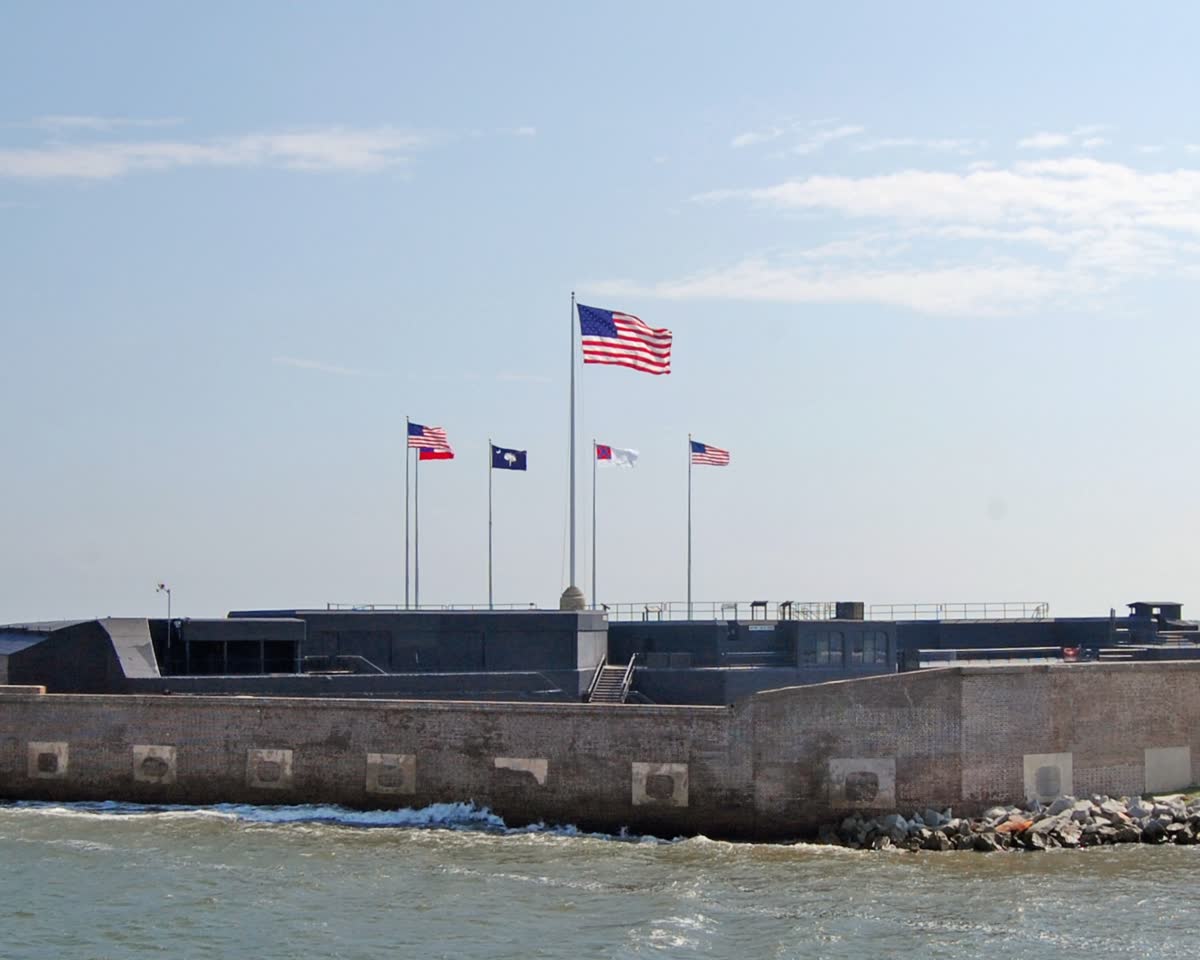
A fort built to guard a harbor
After the War of 1812, the United States began building coastal forts to protect its harbors. Construction of Fort Sumter began in 1829 on an artificial island built from granite and rubble. It was named for Thomas Sumter, a South Carolina officer in the Continental Army during the American Revolution. More than thirty years later the fort was still unfinished.
The crisis of 1860 and 1861
After Abraham Lincoln was elected president in November 1860, South Carolina became the first state to secede from the Union, in December 1860, determined to protect slavery. Six days later, on December 26, U.S. Army Major Robert Anderson quietly moved his small garrison from the exposed Fort Moultrie to the stronger Fort Sumter in the middle of the harbor.
For months both sides waited. At 4:30 in the morning on April 12, 1861, Confederate batteries around the harbor opened fire on the fort. After 34 hours of bombardment, with the fort burning and supplies running out, Anderson surrendered on April 13. No one was killed by the bombardment itself, but during the 100-gun salute Anderson was allowed to fire to his flag, an accidental explosion killed one Union soldier and mortally wounded another. The Civil War had begun.
Freedom and return
In May 1862, Robert Smalls, an enslaved man working on the Confederate ship Planter, took command of the vessel before dawn and, with his family and other enslaved people aboard, steered it past Fort Sumter's guns to the Union fleet and to freedom. He later served five terms in the U.S. Congress.
Union forces took back Fort Sumter in February 1865. On April 14, 1865, four years to the day after leaving it, Robert Anderson returned and raised over the fort the same flag he had been forced to lower in 1861.
Fort Sumter today
In 1948 the fort became Fort Sumter National Monument. Today it is part of Fort Sumter and Fort Moultrie National Historical Park, cared for by the National Park Service, where visitors can walk the walls, see the cannons, and learn the full story of the war and of the people it freed.
Planning your visit
- Getting there: the fort is reached only by boat. Ferries leave from the Fort Sumter Visitor Education Center at Liberty Square in downtown Charleston and from Patriots Point in Mount Pleasant.
- Ferry times, tickets and park hours: check the National Park Service website before you go.
- Nearby: Fort Moultrie on Sullivan's Island, Charleston's historic district, the Battery, and Rainbow Row.
Making a home in South Carolina
From Charleston and the Lowcountry to Columbia, Greenville and the coast at Myrtle Beach, South Carolina welcomes families with its history, its hospitality and its growing communities. Beyond Financing, Inc. is licensed in South Carolina as a mortgage broker and correspondent lender. Whether you are buying your first home, are self-employed, or file taxes with an ITIN, our team will compare programs from several lenders and explain every step in English, Português or Español.
Talk with our teamEstimate a monthly payment
More stories from the states we serve →
Sources
- National Park Service, Fort Sumter and Fort Moultrie National Historical Park
- Wikipedia, "Fort Sumter" and "Robert Smalls"
Part of our series honoring the communities in the nine states where Beyond Financing, Inc. is licensed. Beyond Financing, Inc., NMLS #2394496. Equal Housing Opportunity. This is not a commitment to lend; all loans are subject to credit approval and program guidelines. Not affiliated with the National Park Service or Beyond Finance, LLC.